Sheer Layers or Solid Shades? Choosing Window Treatments by Priority
Windows shape how a room looks and feels. Choosing a treatment is less about fashion and more about priorities: do you want to invite daylight, control privacy, improve insulation, or keep cleaning minimal? Two clear approaches answer those needs in different ways. Below is a focused comparison of the light-first, layered sheer approach and the privacy/performance, solid shade approach, followed by practical guidance for choosing between them.
Approach A — Light-First: Sheer Layers with Decorative Panels
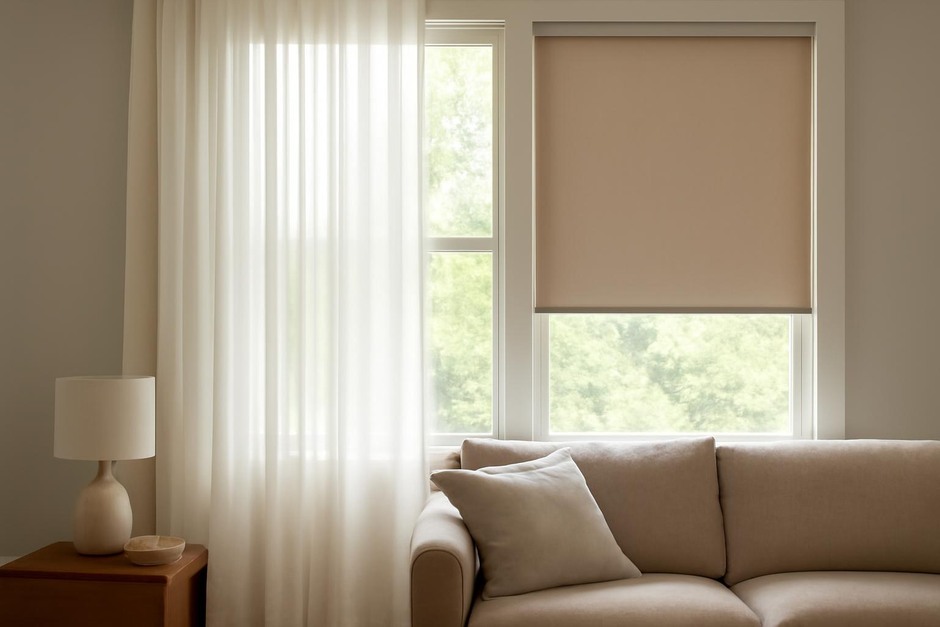
This approach centers daylight and an easy, lived-in look. Sheers soften incoming sun, diffuse glare, and make a room feel airy even when the panels are closed. A common configuration is a lightweight sheer on an inner track with heavier decorative panels on an outer rod.
Strengths
- Daylight management: Sheers allow natural light while reducing harsh shadows.
- Visual softness: Textiles add texture and warmth without fully blocking views.
- Layering flexibility: You can pair sheers with heavier drapes when needed.
- Style versatility: Works well in living rooms, dining areas, and sunlit bedrooms.
Trade-offs
- Less privacy at night unless paired with opaque layers.
- Lower thermal performance unless you add liners or a second layer.
- More fabric means more laundering or dusting over time.
Small examples and rules of thumb
- Hang the rod 4–6 inches above the window frame, or closer to the ceiling for a taller look.
- Make panels 1.5–2 times the width of the window for proper fullness.
- For a casual look, let panels hover 1/2 inch above the floor; for formal, they can puddle slightly.
Approach B — Privacy & Performance: Solid Shades and Opaque Treatments
This approach aims for control: blackout roller shades, roman shades with a liner, or tightly woven cellular shades. It prioritizes privacy, light blocking, and often thermal improvement.
Strengths
- Privacy: Opaque materials stop views from outside, especially important at night.
- Light control: Blackout options can make bedrooms and media rooms truly dark.
- Thermal and acoustic benefits: Cellular and layered shades improve insulation and reduce street noise.
- Low visual clutter: Inside-mount shades offer a clean, minimal look.
Trade-offs
- Can make a room feel closed-off if used alone during the day.
- Fewer textural and decorative options unless you add side panels.
- Fabric shades may require occasional spot-cleaning rather than full washing.
Small examples and rules of thumb
- For full coverage, choose an outside mount that extends 3–6 inches beyond the frame on each side.
- Top-down/bottom-up shades let you keep privacy at eye level while admitting light above.
- Cellular shades come in single, double, or triple cell; more cells mean better insulation.
How to Choose Between Them: A Short Decision Guide
Answer the following briefly to see which approach matches the room.
- Is daylight a priority? If you want even light and a connection to the outdoors, lean toward sheers. If you need darkness or strict glare control, choose solid shades.
- Do you need privacy at night? If yes, prefer opaque treatments—or pair sheers with a blackout layer for the best of both worlds.
- Are thermal gains or noise reduction important? Choose cellular shades or lined drapes; they outperform single-layer sheers.
- How much maintenance is acceptable? Sheers often need washing; roller shades usually need only a quick dusting.
- What’s your stylistic aim? For a soft, layered look go sheer; for a modern, minimal feel go solid. You can combine the two: a shear inside with an outside-mounted shade for style and function.
Quick pairings to try
- Bedroom: Blackout roller shade inside the frame + decorative curtains outside the frame for style and nighttime privacy.
- Living room with a view: Floor-length sheers + sliding, operable opaque panels for evening use.
- Rental or small bathroom: Frosted privacy film or high-mounted sheer + waterproof exterior shade for privacy without permanent changes.
- Nursery: Blackout cellular shade with a lightweight sheer valance for a calming daytime atmosphere.
In practice, many homes benefit from a hybrid approach: use sheers to shape daylight and solid shades for performance. Start with your dominant need—light, privacy, or insulation—and then pick one primary treatment and a secondary layer that fills the gaps. Small changes, like raising the rod a few inches or extending the width of the hardware, often make the biggest visual impact without replacing the whole system.
Tip: Order fabric swatches and a sample of the shade material before committing. Seeing how light passes through the actual material in your room simplifies the choice more than any photo can.